

November 14th, 2019. My 23rd birthday.
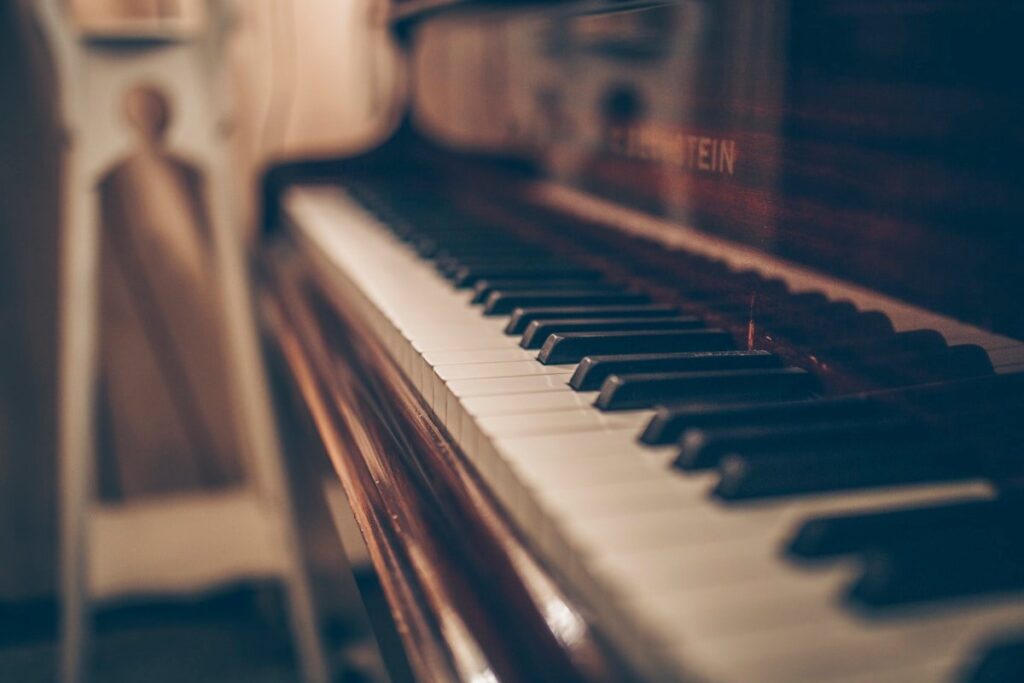
I'm standing in some guy's garage in Burbank, handing over $147 cash for a Yamaha PSR-E363 that has a sticky D key and smells faintly like cat. He throws in a torn-up sustain pedal. Happy birthday to me.
Everyone I told about this purchase gave me the same look. That polite smile people do when they think you're being naive. "Oh, that's nice." Like I'd said I was training for the Olympics at 45.
The thing is, I'd wanted to learn piano since I was a kid. Never had the money or the access. By 23 I had a job, a tiny apartment, and just enough disposable income to buy a janky keyboard from some stranger's garage. So I did.
That was a few years ago. I can play now. Actually play – songs people recognize, stuff that sounds like music. Not amazing, not concert-level, but real. If you'd told 23-year-old me in that cat-smelling garage that I'd get here, I wouldn't have believed it.
But man, I did so much wrong along the way.
First few weeks were chaos. Couldn't find middle C consistently. The tutorial kept saying "find the group of two black keys" and I kept finding the wrong group. There are a lot of groups of two black keys. Nobody warns you about this when you're starting from zero. I eventually wrote a whole guide on what to actually do your first week because I wasted so much time fumbling around.
I played everything with my index finger. Like I was typing an email. Didn't even occur to me that finger choice mattered until I watched someone else play and noticed their whole hand was involved. Felt pretty dumb about that.
Biggest mistake though was ignoring my left hand. For almost two months I only practiced right hand stuff because it sounded better and didn't make me feel useless. By the time I tried to put both hands together, my left was so far behind it was like starting over. Cost me months of catch-up. I wrote about the left hand problem specifically because so many beginners do the same thing. If you're reading this and doing that, stop. Practice left hand from day one. I'm serious.
I also avoided theory. Thought it was boring academic stuff that wouldn't help me actually play songs. Wrong again. Around month eight I finally sat down and learned basics – scales, chords, keys – and suddenly everything made more sense. Patterns appeared everywhere. Songs got easier to learn. Should've done it way sooner. There's a reason I eventually wrote music theory in plain English.
The metronome thing too. I hated metronomes. Felt restrictive and annoying. So I practiced without one for months. Then I recorded myself and realized my timing was garbage. Like genuinely bad. The metronome would've caught that in week one.
Around month three I hit this wall. Progress just stopped. Practiced the same song for two weeks and it got worse, not better. I almost quit. Genuinely considered selling my keyboard back to garage guy.
What I didn't know: that's a plateau. Everyone hits them. It's your brain consolidating before it can level up. Feels like failure but it's actually processing. I talk more about this in dealing with plateaus.
The breakthrough came in month four. February 2020. I'd been grinding on a simplified "Lean on Me" for weeks. One random Tuesday night, around 11pm, I played it start to finish without stopping. No mistakes. Both hands working together. Actually sounded like music.
I just sat there staring at my hands. Like wait. I did that? That was me?
That feeling is why I kept going. Still chase it every time I nail a new piece.
If I could restart knowing what I know now: practice left hand from day one. Use a metronome from week two. Learn basic theory within the first few months. Practice less time but every day – the 10-minute rule changed everything for me. And be patient with yourself – you're supposed to be bad at first.
If you're reading this wondering if you're too old to start – you're not. I'm proof. Go find a keyboard. Even a janky one from some guy's garage. Start today.
For the full roadmap, check out my complete beginner's guide.